

BELGIAN trade unionists refusing to handle work for any flight to Israel carrying military equipment stand in the noblest tradition of the labour movement.
Their action echoes that of the four workers at an East Kilbride Rolls-Royce factory who, in 1974, refused to repair engines for Chilean air force Hawker Hunter jets being used to bomb civilians by the Pinochet regime.
The consequences of their action reverberated through the movement. Chilean authorities pretended it had no effect: but as the film Nae Pasaran would expose years later through the testimony of former Chilean air force chief Fernando Rojas Vender, its impact was crippling, almost grounding the force’s entire Hawker Hunter fleet.
We should remember that when told nothing we do or say here can have an impact on Israel or Palestine.
The scale of anger in Labour at Keir Starmer for endorsing the collective punishment of the Palestinian people is spreading. Starmer has had to row back on his assertion that Israel has the right to cut off water, food and fuel to the whole population of Gaza, but his refusal to call for a ceasefire has provoked revolt way beyond the left of the party. Right-wing social democracy is aghast at the sudden vulnerability of a leader who has previously crushed dissent with ease.
Those who realise few Labour Party members will stomach an actual defence of Israel’s mass killing of civilians plead instead that we shouldn’t get worked up about something we can’t change.
This is the line adopted by Andrew Rawnsley and Polly Toynbee in the Observer and Guardian — why allow a foreign conflict to tear the party apart? Whatever the leader of the British opposition says will make no difference anyway.
Their attitude speaks for an entire tradition on Britain’s “centre-left” of ignoring or excusing imperialist foreign policy as somehow unrelated to the concerns of British workers.
But Israel’s war on Gaza is not something we can do nothing about. Israel is a close British ally. Our Prime Minister, Rishi Sunak, has assured its far-right government it wants it to “win” a conflict with hallmarks of an ethnic cleansing operation.
Britain is a major arms supplier to Israel. As Declassified UK revealed last month, we have licensed at least £472 million in arms exports to Israel since 2015, including drones and components for F-35 warplanes currently bombing Palestine.
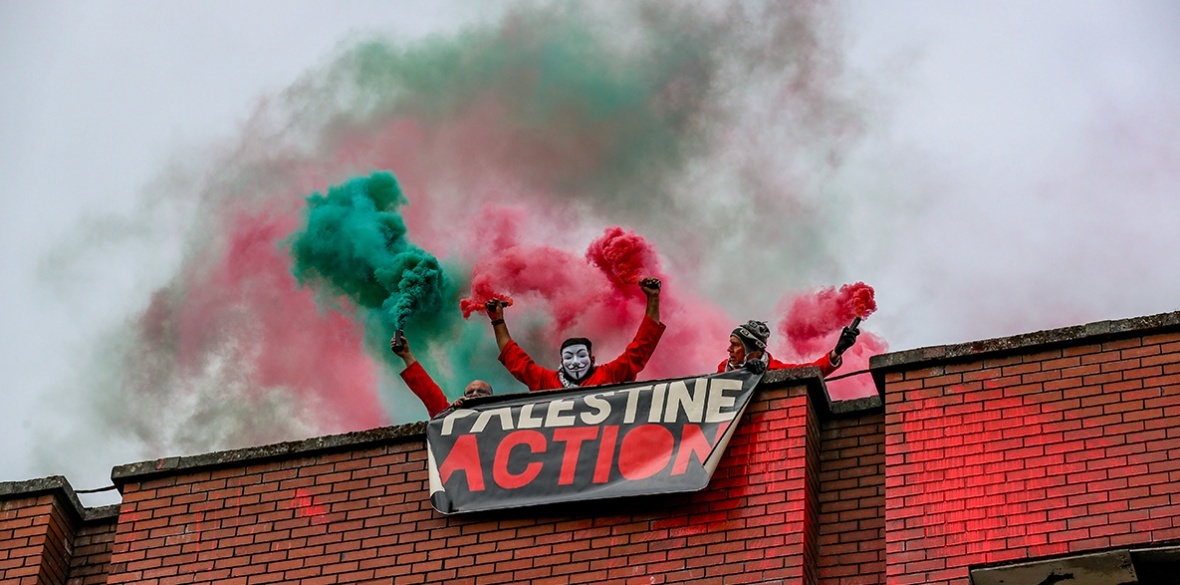
As the Palestine Action protests targeting Elbit Systems factories highlight, we allow Israeli arms manufacturers to produce deadly weapons systems over here.
It is not clear what other military support is being offered to the Israeli Defence Forces in their assault on a territory without a single tank, warplane or naval vessel, but we know at least two Royal Navy vessels were despatched to the region to “boost security,” and surveillance aircraft too.
We know that British forces offered logistical assistance to the Saudi air force as it bombed schools, hospitals and residential neighbourhoods in Yemen; British special forces were deployed there too, something we only learned when five were wounded in 2019. We are not told the truth about where our soldiers are or what they are doing.
Britain plays a key role in arming and facilitating Israel’s illegal occupation of Palestine and current all-out assault on Gaza. The impact of ceasing to do so would be significant, and political pressure here to that end is vital.
If Starmer had any respect for democratic processes this would already be his policy, since Labour conference voted to ban arms sales to Israel in 2021.
The other key lesson is that Britain’s arms industry is not innocent. Weaponry produced here is used by other brutal governments to massacre civilians.
The TUC has in recent years adopted policy in favour of greater arms spending: the horrors being visited on Palestinians should be a wake-up call that it was wrong.






